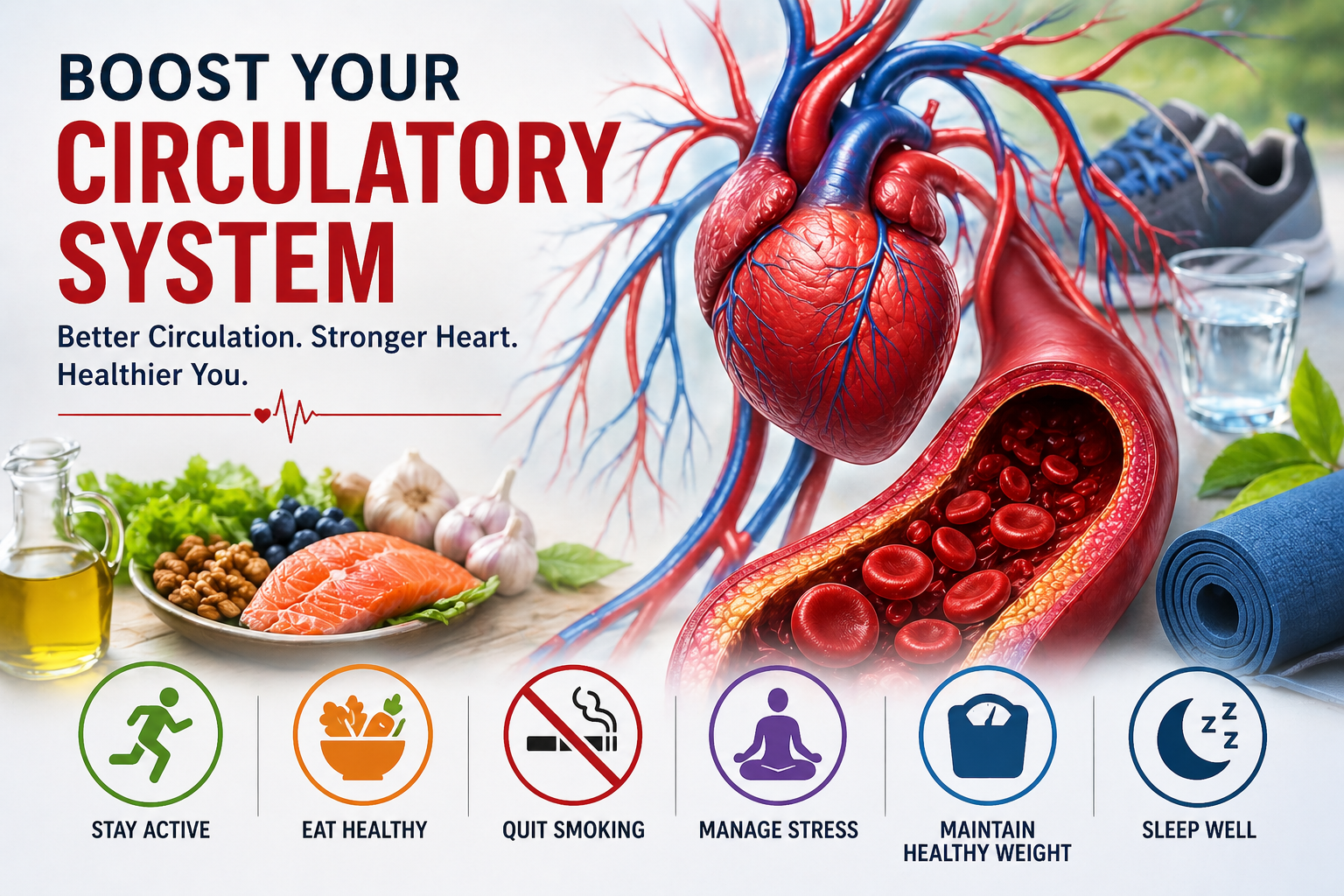
Your circulatory system is the body's transportation network. It delivers oxygen, nutrients, hormones, and immune cells to every organ and tissue. When circulation is strong, you feel energetic, mentally sharp, and physically capable.
Many people talk about "dissolving blockages," but significant arterial plaque cannot simply be melted away overnight. However, healthy lifestyle changes can help stabilize plaque, slow its progression, improve blood vessel function, and may even modestly reduce plaque over time.
The goal isn't a miracle cure—it's creating an internal environment where your cardiovascular system can thrive.
1. Move Every Day
Exercise is one of the most powerful ways to improve circulation. Physical activity strengthens the heart, increases nitric oxide production, and helps arteries remain flexible.
Best Activities for Blood Flow
- Brisk walking
- Cycling
- Swimming
- Dancing
- Light jogging
Aim for at least 30 minutes of moderate exercise most days of the week.
2. Embrace Heart-Healthy Foods
Your arteries love foods rich in antioxidants, fiber, and healthy fats.
Top Circulation-Boosting Foods
- Leafy greens
- Berries
- Garlic
- Fatty fish
- Walnuts
- Olive oil
- Oats
- Dark chocolate (in moderation)
These foods help reduce inflammation, improve cholesterol levels, and support blood vessel health.
3. Control Blood Pressure and Blood Sugar
High blood pressure and elevated blood sugar can damage blood vessels and accelerate plaque formation.
Healthy Targets
- Blood Pressure: Below 120/80 mmHg
- Fasting Blood Sugar: Under 100 mg/dL
Regular monitoring and healthy lifestyle choices make a huge difference.
4. Quit Smoking Completely
Smoking damages artery walls, promotes clot formation, and significantly increases cardiovascular risk.
Benefits of Quitting
- Heart rate drops within hours
- Circulation improves within weeks
- Heart attack risk declines over time
5. Manage Stress Effectively
Chronic stress raises cortisol and adrenaline, increasing blood pressure and inflammation.
Effective Stress-Reduction Techniques
- Meditation
- Yoga
- Deep breathing
- Nature walks
- Meaningful social connections
6. Maintain a Healthy Weight
Excess abdominal fat contributes to inflammation, insulin resistance, and poor circulation.
Losing just 5–10% of body weight can significantly improve heart health markers.
7. Prioritize Quality Sleep
Poor sleep is closely linked to hypertension, obesity, diabetes, and heart disease.
Aim for 7–8 hours of restorative sleep every night.
Important Medical Note
If you experience chest pain, sudden shortness of breath, leg swelling, or numbness, seek immediate medical attention. Lifestyle measures are powerful, but they do not replace professional medical care.
- Citrus Fruits and Colorful Vegetables (Vitamin C)
Vitamin C protects the lens from UV-induced oxidative damage and helps regenerate other antioxidants like glutathione . Best sources: Oranges, grapefruits, lemons, strawberries, orange juice, bell peppers (especially orange peppers), and broccol
Nuts, Seeds, and Whole Grains (Vitamin E and Fiber)
Vitamin E shields eye cell membranes from free radical damage, while fiber-rich whole grains support overall metabolic health . Best sources: Pistachios, various nuts and seeds, vegetable oils, and whole grain products
Important Clinical Consideration: While a plant-based diet is highly protective, those following a strict vegan diet must supplement with Vitamin B12, as a deficiency can lead to elevated homocysteine levels, which is a risk factor for cortical cataracts